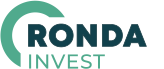
Do you understand credit and loans? What can a loan be secured with? And how do you look at collateral from the other side - when you invest in loans? Read more.
A loan is a financial service where one party provides another party with temporarily missing funds. The other party then repays the funds at a certain date under agreed conditions, paying interest on top of the original amount owed.
The Civil Code distinguishes between a loan and a credit. The fundamental difference between a loan and a credit is a legal one, since a credit does not necessarily have to be monetary, does not have to bear interest, and can be concluded for an indefinite period of time.

Don’t confuse concepts with impressions! Here are the very basic ones that you probably know, or definitely should know, to read on.
By securing the loan, the lender is securing against loss in case the borrower is unable to repay the loan for any reason.
The first thing that precedes the whole process of borrowing money is usually a credit check, i.e., a check on the prospective borrower’s ability to repay the loan. The borrower’s income and expenses are checked, as well as how they meet their other financial obligations. The credit check, but also the correct limitation of the loan amount and the diversification of the risk, can, in themselves, prevent future complications and are, therefore, among the most important factors for loan approval.
If the loan amount is larger or the loan is otherwise risky, then the lender requires additional provisions in case the future borrower stops repaying. This is where the security for the loan comes in.
As explained clearly on the European Central Bank’s website, collateral is an item of a certain value that the lender can withdraw from the borrower if the borrower fails to repay the loan according to the agreed terms. A typical example is a mortgage, where the bank asks you to provide the relevant property as collateral. This means that if you default on the mortgage, the bank will foreclose on the mortgage and sell the property to recover the money it has lent you. Generally, the collateral serves as a guarantee that the lender (not just the bank) will get back the amount borrowed, even if the borrower does not repay their debt.

Other forms of collateral for loans:
When you invest in loans, you become the one who earns the interest. Since every investment carries a certain risk of loss, the better the loan is secured, the better it is for you. Let’s take a look at the terms you may encounter:
A pawn loan is a short-term loan that is secured by a pledge of movable assets such as securities, jewelry, precious metals, or other commodities.
A balloon loan is defined by the way the debt is repaid. The most common is a loan repaid by annuity, a regular payment that includes both principal and interest payments. A balloon loan, on the other hand, means that the borrower makes regular interest payments but pays the principal in one lump sum (at most, together with the last payment). Because the principal does not depreciate over time, this method of financing is attractive to an investor because it can earn more money in interest in total at the same interest rate than an annuity.
Security in immovable property is attractive to investors if the lender has a lien on the property and the right of direct enforcement of the debt. The loan is better secured the lower the LTV. This indicates the amount of the loan compared to the value of the collateral. For example, a loan of CZK 6 million with an LTV of 60% says that the loan amount is 60% of the total value of the mortgaged property, which is worth CZK 10 million. This creates a 40% reserve in case, for example, the value of the property falls for any reason.
The RONDA INVEST platform uses this type of collateral. Thanks to the combination of a lien, enforceability, and low LTV, the level of collateral is high.
Mezzanine loan is riskier for investors. It means that the lender does not have a first lien on the property if something goes wrong. For example: a bank provided a mortgage loan to a borrower, but the borrower needed additional funds and obtained them from another non-bank institution. This non-banking institution offers to invest in the loan. If the borrower stops making payments, the bank, as the senior (main) lender, sells the secured property and covers its part of the outstanding loan first. If the fair value of the property does not cover the entire debt, there will be no funds left for the mezzanine lender or its investors to cover the losses.
(c) ilustration: Designed by Freepik and Pixabay

 Premium
Výnos

Výnos představuje peněžní částku, kterou získáte za investovaný kapitál. Udává rozdíl mezi konečnou hodnotou investice a použitým kapitálem.
p.a. znamená per annum, tedy výnos vypočítaný na roční bázi.
Příklad:
Investujete 10 000 Kč s výnosem 10 % p.a. Výnosy vám budeme vyplácet v poměrné výši každý měsíc, za rok na výnosech získáte celkem 1 000 Kč.
Splatnost
Splatnost udává závazné datum, do kdy bude úvěr splacen a kdy končí vaše investice.
Po tomto datu zašleme na váš účet spolu s posledním výnosem i původní investovanou částku.
Min. investice
Minimální investice udává nejnižší možnou částku, kterou lze do projektu zainvestovat.
LTV
LTV = Loan to Value
(v překladu „úvěr k hodnotě“)
LTV udává poměr hodnoty úvěru k hodnotě nemovitosti. Čím je nižší LTV, tím je vyšší zajištění.
Výpočet LTV = výše úvěru / odhad tržní ceny × 100

Ostrava

Výnos
Výnos představuje peněžní částku, kterou získáte za investovaný kapitál. Udává rozdíl mezi konečnou hodnotou investice a použitým kapitálem.
p.a. znamená per annum, tedy výnos vypočítaný na roční bázi.
Příklad:
Investujete 10 000 Kč s výnosem 10 % p.a. Výnosy vám budeme vyplácet v poměrné výši každý měsíc, za rok na výnosech získáte celkem 1 000 Kč.
Splatnost
Splatnost udává závazné datum, do kdy bude úvěr splacen a kdy končí vaše investice.
Po tomto datu zašleme na váš účet spolu s posledním výnosem i původní investovanou částku.
Min. investice
Minimální investice udává nejnižší možnou částku, kterou lze do projektu zainvestovat.
LTV
LTV = Loan to Value
(v překladu „úvěr k hodnotě“)
LTV udává poměr hodnoty úvěru k hodnotě nemovitosti. Čím je nižší LTV, tím je vyšší zajištění.
Výpočet LTV = výše úvěru / odhad tržní ceny × 100
Nitra - Mlynárce

 Akční investice
Výnos
Výnos představuje peněžní částku, kterou získáte za investovaný kapitál. Udává rozdíl mezi konečnou hodnotou investice a použitým kapitálem.
p.a. znamená per annum, tedy výnos vypočítaný na roční bázi.
Příklad:
Investujete 10 000 Kč s výnosem 10 % p.a. Výnosy vám budeme vyplácet v poměrné výši každý měsíc, za rok na výnosech získáte celkem 1 000 Kč.
Splatnost
Splatnost udává závazné datum, do kdy bude úvěr splacen a kdy končí vaše investice.
Po tomto datu zašleme na váš účet spolu s posledním výnosem i původní investovanou částku.
Min. investice
Minimální investice udává nejnižší možnou částku, kterou lze do projektu zainvestovat.
LTV
LTV = Loan to Value
(v překladu „úvěr k hodnotě“)
LTV udává poměr hodnoty úvěru k hodnotě nemovitosti. Čím je nižší LTV, tím je vyšší zajištění.
Výpočet LTV = výše úvěru / odhad tržní ceny × 100
Praha – Lipence
 KALKULAČKA

Výpočet kalkulačky vychází z modelového příkladu investice do jednorázově splatného úvěru (celá jistina splatná na konci splatnosti úvěru). Výnosy jsou investorům vypláceny měsíčně a kalkulačka nepočítá s jejich reinvestováním. Reálné zhodnocení investice se může od modelového příkladu lišit. Jedná se o hrubý výnos, který podléhá zdanění. U RONDY INVEST neplatíte žádné vstupní poplatky ani žádné pravidelné poplatky.